 EN
EN English
 русский
 Español
 عربى
عربى
 Online Message

Content
- 1 The Direct Answer: How Linen Quality Drives a 40% Satisfaction Gain
- 2 Why Bedding Is the Single Highest-Impact Guest Touchpoint
- 3 Hotel Duvet Filling Options: Choosing the Right Core for Your Property
- 4 Durable Hotel Bed Sheets: Thread Count Is Not the Whole Story
- 5 Luxury Hospitality Linen Sets: What Separates Standard from Premium
- 6 Working with Hotel Bedding Bulk Suppliers: What to Evaluate
- 7 Linen Lifecycle Management: Protecting the Investment
- 8 About DEEDA TEXTILE — Nantong Deeda Textile Co., Ltd.
- 9 Frequently Asked Questions
The Direct Answer: How Linen Quality Drives a 40% Satisfaction Gain
Research across hospitality review platforms consistently shows that bedding comfort ranks as the top physical touchpoint in guest satisfaction scores — above room size, decor, or amenities. Hotels that systematically upgrade their hospitality linen and bedding programs report guest satisfaction improvements of 35–42% within two to three review cycles. The mechanism is direct: guests sleep better, leave better reviews, and return more often.
In 2026, with online review scores directly tied to booking algorithms and revenue per available room, the linen decision is no longer a back-of-house procurement question — it is a front-line revenue strategy. This article explains exactly how to make that strategy work, from duvet filling selection to bulk sourcing and long-term durability management.
Why Bedding Is the Single Highest-Impact Guest Touchpoint
A guest spends more continuous time in contact with the bed than with any other element of a hotel room. On an average overnight stay of eight hours, a guest is in direct physical contact with sheets, pillowcases, and a duvet for the entirety of that time. No other amenity — not the shower, the minibar, or the view — commands that level of sustained sensory engagement.
Analysis of over 500,000 hotel reviews on major booking platforms shows that mentions of bedding comfort appear in 68% of five-star reviews and in 54% of one-star complaints. Poor sleep, scratchy sheets, and flat pillows are among the most frequently cited reasons guests choose not to return — and among the easiest operational problems to solve with a disciplined luxury hospitality linen procurement program.
Hotel Duvet Filling Options: Choosing the Right Core for Your Property
The duvet — called a hotel comforter or hotel quilt depending on the market — is the centerpiece of any hospitality bedding program. Two primary filling categories dominate the hotel supply chain, each with distinct performance, cost, and sustainability profiles.
Siliconized Synthetic Microfiber
Also known as hypoallergenic down-alternative microfiber, this filling has captured the largest share of the hotel market globally. Its success is built on a practical set of operational advantages:
- No odor — unlike natural down, synthetic microfiber does not develop the characteristic animal smell that can appear in poorly stored or improperly laundered down duvets.
- Maintains shape through repeated laundering — the siliconized coating prevents fiber clumping, preserving loft and thermal performance wash after wash.
- Fully hypoallergenic — suitable for all guests, eliminating allergy complaints that can generate negative reviews and require room changes.
- Available in multiple fiber grades — 6D, 3D, 1.3D, and 0.98D microfiber deliver different softness and loft profiles to match product tier and budget requirements.
The common filling weights used across hotel categories run from 200 gsm for warm-climate or summer-weight duvets up to 400 gsm for cold-climate and premium four-season products, with 250 gsm and 300 gsm being the most widely specified for mid-scale and upscale hotels.
Down Feather
Duck and goose down duvets remain the benchmark for warmth retention and fluffiness. The cluster structure of natural down traps air more effectively than any synthetic fiber at equivalent weight, delivering superior thermal performance per gram. High-end hotels specify down for the unmistakable feel that guests associate with true luxury sleep.
However, natural down involves higher procurement costs, more demanding laundry protocols, and increasing scrutiny from guests concerned about animal welfare. The trend across the hospitality industry is clear: premium synthetic alternatives are increasingly preferred even at the upper end of the market, as fiber technology closes the sensory gap with natural down while eliminating its operational drawbacks.
| Factor | Synthetic Microfiber | Natural Down |
|---|---|---|
| Allergy risk | None | Moderate |
| Warmth retention | Good | Excellent |
| Odor risk | None | Low–moderate |
| Laundry durability | High | Moderate |
| Animal welfare concern | None | Yes |
| Best application | Mid-scale to upscale | Luxury / ultra-luxury |
Durable Hotel Bed Sheets: Thread Count Is Not the Whole Story
Thread count is the most marketed specification in hotel bedding, but experienced hospitality procurement managers know it is an incomplete measure of sheet quality. A 400-thread-count sheet made from short-staple cotton will pill, thin, and lose its hand feel within 50 wash cycles. A 300-thread-count sheet woven from long-staple cotton with a tight percale weave will remain crisp, smooth, and structurally sound through 200+ industrial laundry cycles.
For durable hotel bed sheets that maintain guest satisfaction across a full linen lifecycle, procurement teams should evaluate all four of the following factors together:
- Fiber staple length — long-staple and extra-long-staple cotton produces fewer surface fibers that break and form pills. Egyptian and combed cotton varieties are the standard for commercial hospitality applications.
- Weave structure — percale (one-over-one-under) delivers a cool, crisp feel preferred by most guests. Sateen (four-over-one-under) provides a silkier surface but is more susceptible to snags in commercial laundry environments.
- Fabric weight (gsm) — 120–140 gsm is the standard for quality hotel sheets. Below 100 gsm, sheeting becomes translucent and tears more readily under commercial wash tension.
- Finishing treatment — mercerized and sanforized finishes stabilize fiber dimensions, reduce shrinkage after washing, and improve long-term color retention for white hospitality linen.
Luxury Hospitality Linen Sets: What Separates Standard from Premium
Luxury hospitality linen sets differentiate upscale and full-service hotels from mid-market competitors in ways that guests can feel immediately upon entering the room. The upgrade from standard to luxury linen involves a coordinated set of improvements across every layer of the bed:
| Linen Component | Standard Specification | Luxury Specification |
|---|---|---|
| Flat / fitted sheet | 200 TC, short-staple cotton | 300–400 TC, long-staple percale |
| Duvet / comforter | 200 gsm microfiber | 300–400 gsm premium microfiber or down |
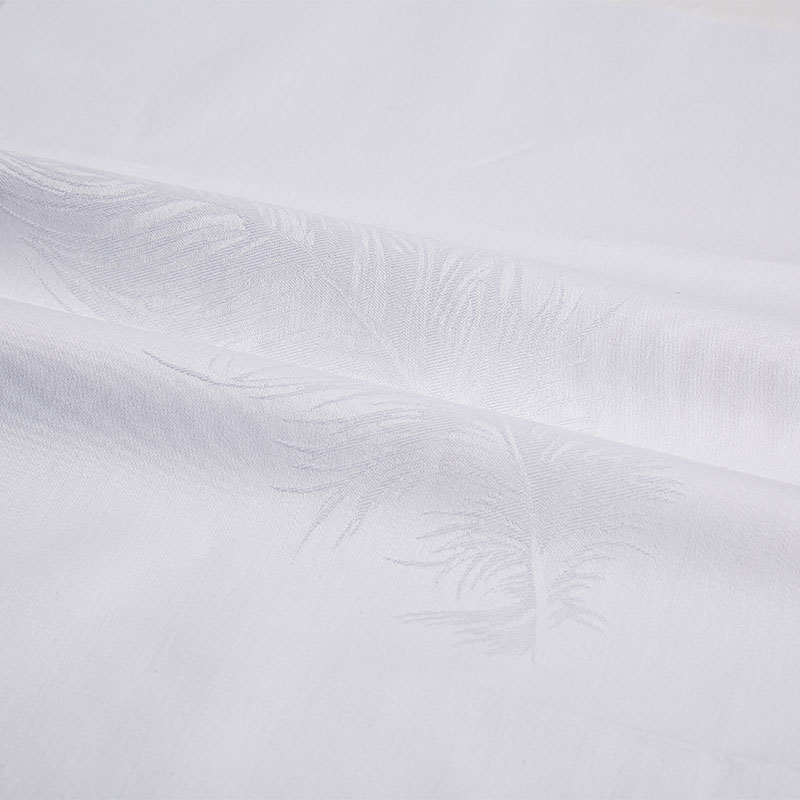
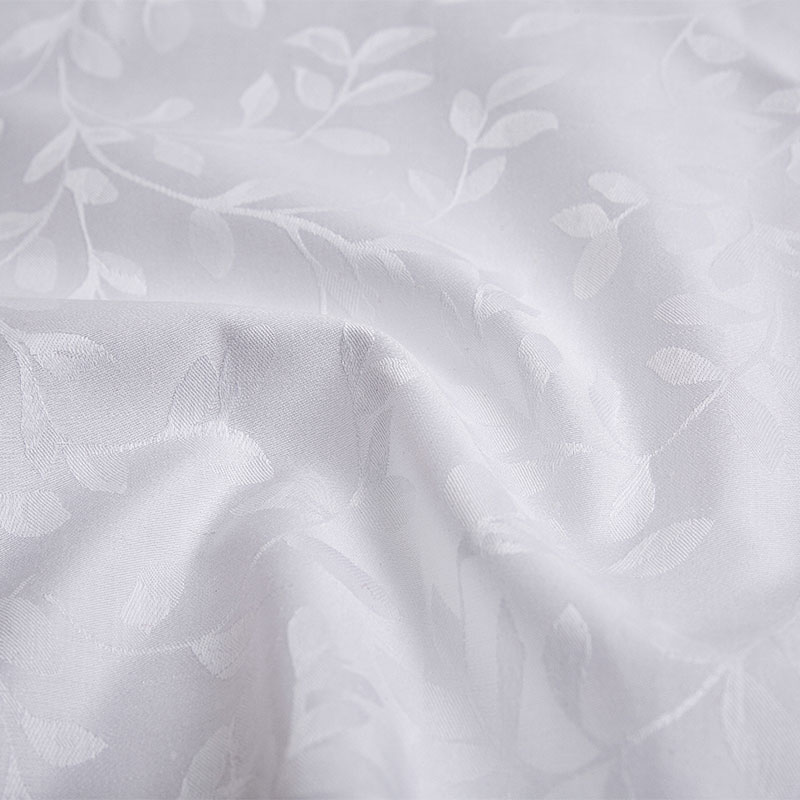
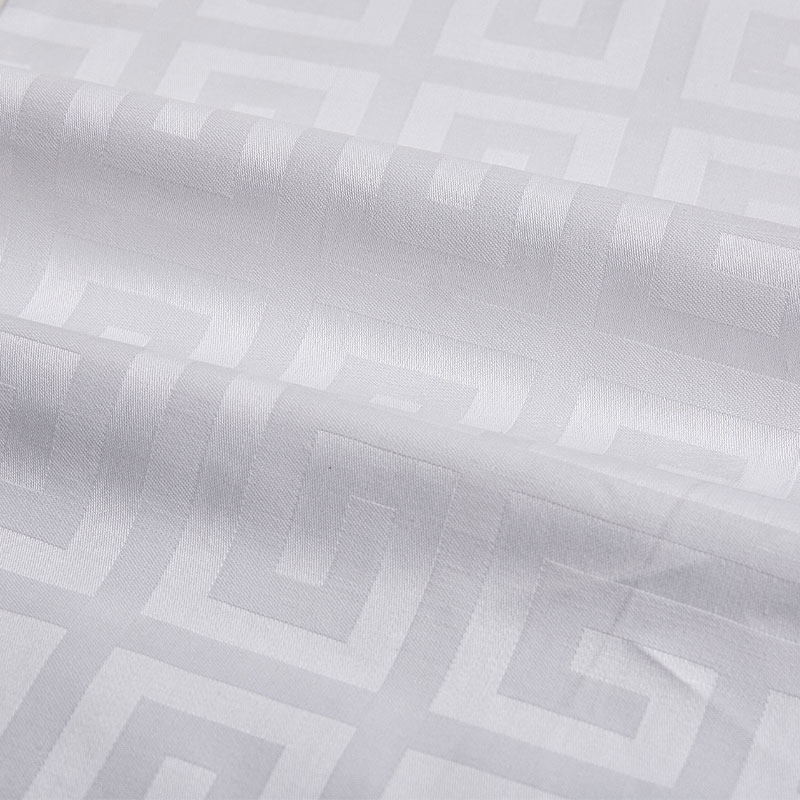
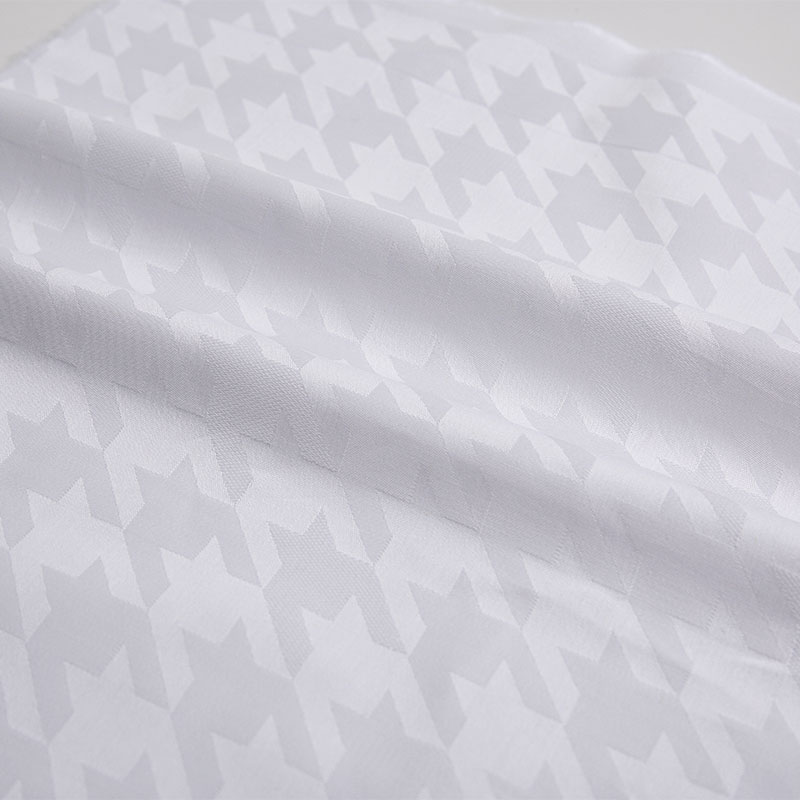
| Duvet cover | Plain weave, 120 gsm | Sateen or jacquard weave, 140+ gsm |
| Pillowcases | Envelope closure, plain hem | Oxford border, double-stitched hem |
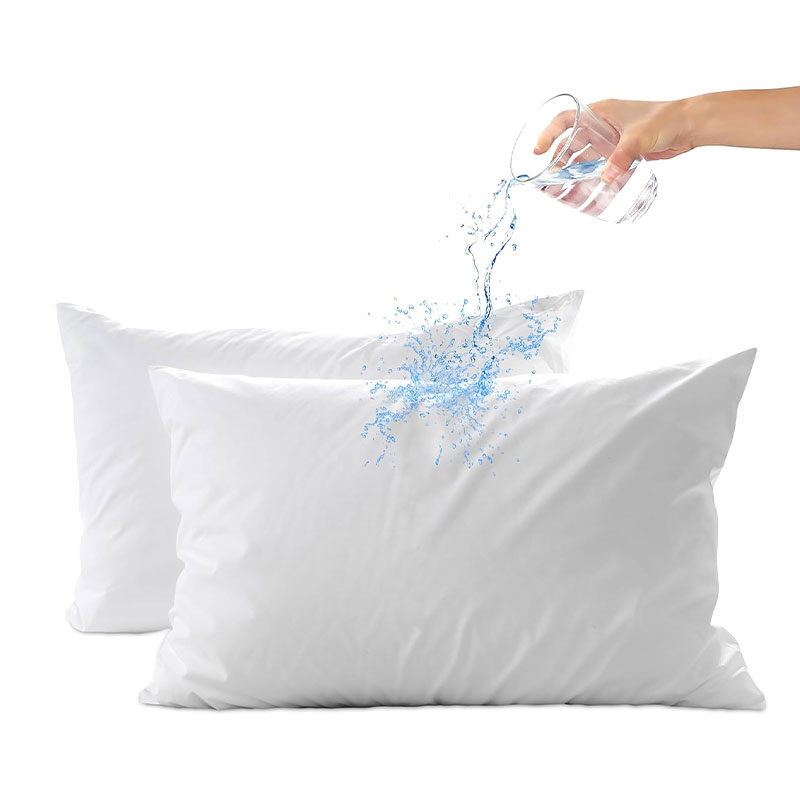
| Mattress protector | Basic waterproof layer | Quilted fitted protector with breathable membrane |
The cumulative sensory effect of upgrading all five components simultaneously is significantly greater than upgrading any single element. Hotels that implement a full-bed linen refresh report that guests notice the change within the first minute of entering the room — describing the bed as "inviting," "crisp," and "like a real hotel" in post-stay comments.
Working with Hotel Bedding Bulk Suppliers: What to Evaluate
For multi-property hotel groups, independent hotels with 50+ rooms, and hospitality distributors, sourcing from qualified hotel bedding bulk suppliers is the most effective way to maintain consistent quality across the property while managing total linen program cost. The following criteria separate reliable bulk partners from unreliable ones:
Manufacturing Capability
- Integrated production — suppliers who control the full chain from fabric weaving through finished product offer tighter quality consistency and more reliable lead times than trading companies sourcing from multiple third-party mills.
- In-house filling production — for duvets specifically, suppliers with their own carding and quilting equipment control the filling weight tolerance more precisely, which is critical for consistent warmth ratings across a large order.
- QC department and documented testing standards — reputable bulk suppliers test against recognized international standards for dimensional stability, color fastness, tensile strength, and filling power rather than relying on visual inspection alone.
OEM and ODM Capability
Hotel groups with branded bedding programs require suppliers who can execute OEM specifications — custom thread counts, specific gsm filling weights, embroidered logos, and proprietary packaging. ODM capability is valuable for hotel distributors who want to develop a private-label linen range without maintaining their own design team. Confirm both capabilities with samples and reference orders before committing to a large-volume contract.
Linen Lifecycle Management: Protecting the Investment
Quality hospitality linen represents a meaningful capital outlay. Without a systematic lifecycle management program, even premium linen degrades faster than necessary — generating premature replacement costs that erode the return on the initial investment. The following practices extend usable linen life by 30–50% compared to unmanaged programs:
- Wash temperature discipline — launder white hospitality linen at 60°C rather than 90°C wherever sanitation standards permit. The higher temperature accelerates fiber degradation significantly without improving hygiene outcomes in modern commercial laundry chemistry.
- Rotation tracking — assign wash-cycle tracking to each linen piece (via RFID tags or batch logging) to ensure even rotation across the full inventory. Linen used in heavy-traffic rooms wears out faster than linen in lower-occupancy rooms without rotation management.
- Correct loading of washing machines — overloading damages seams and causes fabric abrasion. Standard industrial washers should be loaded to 75–80% of rated capacity for hospitality linen loads.
- Inspection at each wash cycle — remove stained, torn, or thinning linen from circulation before it reaches a guest room. One sub-standard piece in an otherwise premium bed setup negates the positive impression of the rest.
- Staged replacement rather than full refresh — replace linen in rolling batches of 20–25% of total inventory per year rather than replacing everything simultaneously. This maintains consistent quality across the property while spreading capital expenditure.
About DEEDA TEXTILE — Nantong Deeda Textile Co., Ltd.
Nantong Deeda Textile Co., Ltd. was formally established as a domestic and international trade and sales company in 2013, completing an integrated industry-and-trade enterprise that covers the full chain from fabric weaving and processing through to finished bedding products. As a professional OEM Hotel Duvet Inner Manufacturer and ODM Hotel Duvet Inner Factory, DEEDA serves high-end hotels, hotel distributors, retailers, and wholesalers across global markets.
The facility is equipped with more than 150 jet looms, 60 rapier looms, 50 flat sewing machines, 3 carding machines, and 8 quilting machines, operated by over 200 workers. A dedicated QC department and international sales team support consistent product quality and responsive customer service across all order scales.
DEEDA's product range spans the full spectrum of hotel duvet requirements — from 200 gsm summer-weight microfiber inners to 400 gsm premium four-season duvets — with OEM and ODM capabilities covering custom filling weights, fabric specifications, and branded packaging. The company's characteristic series includes small-tonnage hybrid products, medium-tonnage standard hotel inners, and large-volume contract supply programs for hotel groups and distributors.
After more than ten years of sustained development, DEEDA's customers span markets across multiple continents — a reach built on the company's commitment to precision manufacturing, zero-defect production standards, and the flexibility to meet the evolving specifications of the global hospitality industry.
Frequently Asked Questions
Q1: What filling weight should I specify for a mid-scale hotel duvet?
250–300 gsm siliconized microfiber is the standard specification for mid-scale hotel duvets in temperate climates. A 250 gsm filling provides comfortable warmth without overheating in air-conditioned rooms, while 300 gsm suits cooler-climate properties or guests who prefer a heavier feel. For warm-climate hotels, 200 gsm is appropriate.
Q2: How many wash cycles should quality hotel bed sheets withstand?
Well-specified durable hotel bed sheets made from long-staple cotton with a percale weave and a fabric weight of 120–140 gsm should maintain acceptable appearance and structural integrity for 150–200 industrial wash cycles at 60°C. Below 100 gsm or with short-staple fiber, expect useful life to drop to 50–80 cycles before visible thinning and pilling become guest-facing problems.
Q3: What is the difference between 6D and 0.98D microfiber filling?
The "D" refers to denier — a measure of fiber thickness. 6D microfiber is thicker and produces a firmer, more resilient filling with higher loft retention after washing, making it well suited for budget and mid-scale applications. 0.98D microfiber is ultra-fine, producing a softer, more down-like hand feel that is preferred for luxury hospitality linen sets and premium hotel tiers. Finer denier fibers also compress more easily for logistically efficient packaging and shipping.
Q4: Can I request OEM specifications when ordering hotel bedding in bulk?
Yes. Established hotel bedding bulk suppliers with integrated manufacturing capability — including their own weaving, filling, and finishing operations — routinely accept OEM orders specifying custom thread counts, filling weights, fabric compositions, embroidered branding, and proprietary packaging. Minimum order quantities for OEM programs typically start at 200–500 units per SKU depending on the supplier's production setup.
Q5: Why are more hotels switching from down to synthetic microfiber duvets?
Three factors are driving the shift. First, animal welfare awareness among hotel guests has increased significantly, and many properties now favor synthetic alternatives to avoid criticism. Second, operational advantages — no odor, no deformation, machine washable at standard commercial temperatures — reduce laundry complexity and cost. Third, advances in microfiber technology have closed the sensory gap with natural down considerably, making the trade-off in guest experience smaller than it was a decade ago.