 EN
EN English
 русский
 Español
 عربى
عربى
 Online Message

The direct answer: hotel pillow protectors should be replaced every 12 to 18 months under standard operating conditions, with laundering required after every single guest checkout. This schedule is widely endorsed by hospitality hygiene consultants and property management auditors as of 2026. High-occupancy or upscale properties should target a shorter cycle of 6 to 12 months to maintain consistent guest satisfaction and sanitation standards.
Whether you manage a small boutique property or a large hotel chain, understanding the full lifecycle of a hotel pillow protector — from selection and laundering to timely replacement — is one of the most practical steps you can take to protect both guest health and your bedding investment.
Content
- 1 Why Pillow Protectors Are a Non-Negotiable Hygiene Layer
- 2 Replacement Intervals by Hotel Category
- 3 Visual Signs That Require Immediate Replacement
- 4 Laundering Practices That Protect and Extend Protector Lifespan
- 5 Selecting the Right Protector: Waterproof, Hypoallergenic, or Standard Cotton
- 6 Building a Structured Replacement Program for Housekeeping Managers
- 7 Frequently Asked Questions
Why Pillow Protectors Are a Non-Negotiable Hygiene Layer
A hotel pillow protector sits between the decorative pillowcase and the pillow fill, acting as the primary barrier against sweat, body oils, allergens, dust mites, and accidental fluid exposure. Without this layer, pillows absorb contaminants at a rate that makes them unsalvageable long before their natural lifespan. Research indicates that an unprotected pillow can host over one million dust mites within two years of regular use.
Hotels that delay or skip regular replacement face measurable consequences:
- Increased guest complaints about odors, skin irritation, and perceived uncleanliness
- Faster degradation of the pillow fill, leading to higher pillow replacement costs
- Risk of failing health and sanitation inspections in regulated markets
- Negative online reviews specifically mentioning bedding hygiene
A well-chosen hypoallergenic pillow protector cover or waterproof hotel pillow encasement provides a washable, durable shield that endures repeated industrial laundering — dramatically extending pillow service life while keeping every guest sleeping on a clean, protected surface.
Replacement Intervals by Hotel Category
Replacement frequency is not one-size-fits-all. It should reflect your property's occupancy rate, laundering protocols, and the material grade of the protectors in use. The table below provides practical benchmarks:
| Hotel Category | Typical Occupancy | Laundering Frequency | Recommended Replacement |
|---|---|---|---|
| Budget / Economy | 60–75% | Every guest checkout | Every 12–18 months |
| Mid-Scale | 75–85% | Every guest checkout | Every 12 months |
| Upscale / Boutique | 80–90% | Every guest checkout | Every 6–12 months |
| Luxury / 5-Star | 85–95% | Every guest checkout | Every 6 months or sooner |
| Medical / Extended Stay | Varies | After every use | Every 3–6 months |
Maximum recommended replacement intervals (months) by hotel category. Replace sooner upon inspection if damage or deterioration is found.
Visual Signs That Require Immediate Replacement
Regardless of the scheduled replacement interval, housekeeping staff should inspect every pillow protector during each laundering cycle. Replace immediately when any of the following signs are present:
- Yellowing or stubborn staining that does not lift after industrial washing
- Torn seams, frayed edges, or holes that compromise the protective barrier
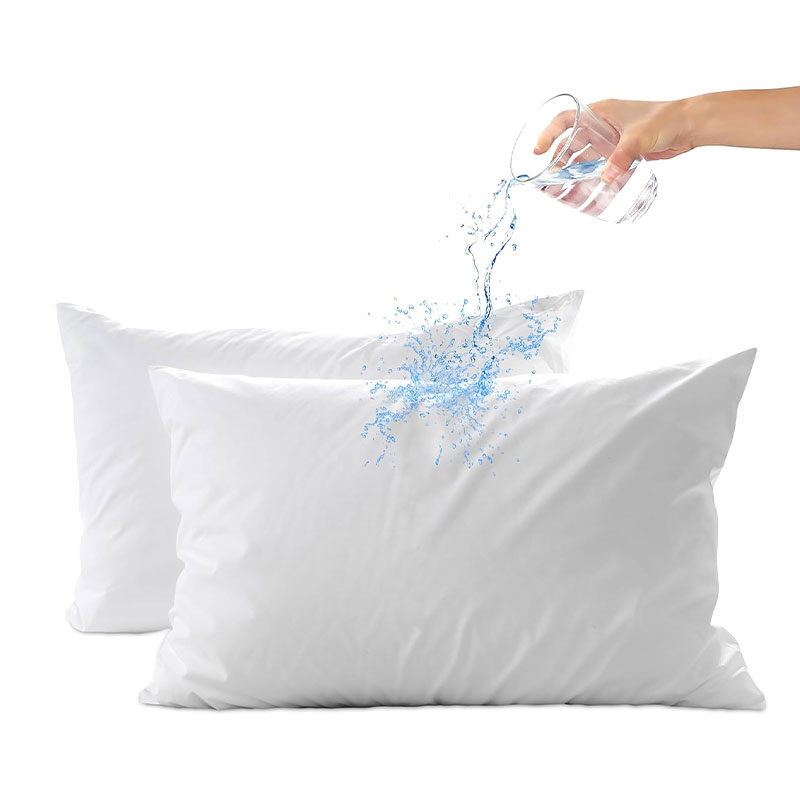
- Loss of waterproof membrane integrity — confirmed when liquids pass through during a simple pour test
- Persistent odor remaining after laundering at the correct temperature
- Fabric pilling, thinning, or stiffness that reduces guest comfort
A waterproof hotel pillow encasement that has lost its liquid-resistant coating should be removed from service immediately — it is no longer performing its intended function. A brief inspection adds under 30 seconds per protector and is one of the simplest quality control steps available to housekeeping teams.
Laundering Practices That Protect and Extend Protector Lifespan
How pillow protectors are washed has a direct impact on how long they last. Improper laundering — excessive heat, wrong detergent chemistry, or overuse of chlorine bleach — degrades both the outer fabric and any waterproof or hypoallergenic membrane prematurely.
Recommended Industrial Laundering Protocol
- Temperature: 60°C (140°F) for standard cotton protectors; check the care label for blended or membrane-coated products
- Detergent: Neutral pH, fragrance-free commercial formulas protect membrane integrity best
- Bleach: Oxygen-based bleach is preferable; chlorine bleach degrades most waterproof coatings within 20–30 wash cycles
- Drying: Low to medium tumble dry; high heat separates laminated layers and breaks down fibers faster
- Ironing: Not recommended for any protector with a waterproof or hypoallergenic backing
Most quality hotel pillow protectors are engineered for 200 to 300 industrial wash cycles before membrane performance begins to decline. For a hotel running at 80% occupancy and laundering after every checkout, this corresponds to approximately 12 to 15 months of active service life — aligning closely with the replacement intervals recommended above.
Selecting the Right Protector: Waterproof, Hypoallergenic, or Standard Cotton
The 2026 hotel bedding market offers three main functional categories of pillow protector. Each serves a different operational priority, and many properties stock more than one type depending on room category.
Waterproof Hotel Pillow Encasement
These feature a laminated or TPU-coated backing that fully repels liquids. They represent the strongest sanitary barrier and are ideal for family hotels, spa resorts, and any high-occupancy property where fluid exposure is a realistic risk. A quality waterproof hotel pillow encasement should maintain its liquid-proof performance for a minimum of 150 industrial washes when cared for correctly.
Hypoallergenic Pillow Protector Cover
Constructed from tightly woven microfiber or OEKO-TEX certified cotton with a pore size below 6 microns, these block dust mite allergens, pet dander, and mold spores while remaining breathable. A hypoallergenic pillow protector cover is especially valuable for wellness-focused properties, elderly traveler demographics, and markets with high allergy prevalence. Studies on allergen-impermeable encasements show they can reduce airborne dust mite allergen levels by over 90% within six weeks of consistent use.
Standard Cotton Pillow Protectors
Typically made from 200–400 thread count percale or sateen weaves, these prioritize guest comfort through superior breathability and a soft hand feel. They provide limited fluid protection but are well-suited to boutique and luxury properties where mattress-level waterproofing handles the moisture barrier role.
Performance comparison (score out of 10) across three hotel pillow protector types. Scores reflect indicative benchmarks by material category.
Building a Structured Replacement Program for Housekeeping Managers
A documented replacement program removes guesswork and ensures consistent hygiene standards across all room types and all seasons. Below is a practical five-step framework any housekeeping manager can implement:
- Tag each protector with a manufacture or installation date using laundry-safe fabric labels or ink stamps to make tracking simple.
- Maintain a par level of at least 3 sets per bed so rotation is possible during high-occupancy periods without cutting corners on laundering turnaround.
- Schedule quarterly inspections where housekeeping leads physically check every protector for the signs of wear and damage described above.
- Record replacement data by room to identify patterns — rooms adjacent to pools or rooms with longer average stays often go through protectors faster.
- Partner with a reliable OEM supplier to ensure replacement stock arrives on time and meets consistent quality specifications, avoiding batch-to-batch variation.
Hotels that implement structured bedding replacement programs typically report a 15 to 20 percent reduction in guest complaints related to bedding within the first six months of implementation, based on hospitality management case data from 2024 and 2025.
Frequently Asked Questions
Q1: How often should a hotel launder pillow protectors?
Pillow protectors must be laundered after every guest checkout, without exception. This baseline applies to all hotel categories and is required to maintain the functional integrity of both waterproof and hypoallergenic products.
Q2: Can a waterproof hotel pillow encasement replace the pillowcase?
No. A waterproof hotel pillow encasement is designed to protect the pillow itself and sits beneath the pillowcase. The pillowcase provides the soft guest-facing surface and must be changed with every new arrival.
Q3: What wash temperature is recommended for hotel pillow protectors?
60°C (140°F) is the standard for cotton-based hotel pillow protectors, as it effectively eliminates dust mites and common pathogens. For protectors with waterproof or hypoallergenic membranes, follow the manufacturer's care label — some membranes degrade at temperatures above 60°C.
Q4: Is a hypoallergenic pillow protector cover the same as a waterproof one?
No. A hypoallergenic pillow protector cover uses a tightly woven fabric to block allergens but does not repel liquids. A waterproof hotel pillow encasement has a fluid-resistant coating. Some products combine both features and are labeled accordingly — these are the most comprehensive choice for hotel properties.
Q5: How many pillow protectors should a hotel keep in stock per bed?
A minimum of 3 sets per bed is the standard recommendation: one in use, one in the laundry cycle, and one in reserve. High-occupancy and resort properties benefit from 4 to 5 sets per bed to accommodate peak demand without compromising laundry turnaround time.
Q6: Does using a pillow protector meaningfully extend pillow lifespan?
Yes, significantly. Pillows used without protectors in hotel environments typically need replacement every 12 to 18 months. With a quality hotel pillow protector in consistent use, pillow lifespan can extend to 3 or more years, delivering measurable cost savings on pillow inventory.
DEEDA TEXTILE
Nantong Deeda Textile Co., Ltd.
In 2013, we officially established a domestic and international trade and sales company, achieving an integrated industry and trade enterprise spanning the full chain from fabric material to finished bedding products. As a professional OEM hotel pillow protector manufacturer and ODM hotel pillow protector factory, the company currently equips more than 150 jet looms, 60 rapier looms, 50 flat sewing machines, 3 carding machines, and 8 quilting machines, with over 200 skilled workers. A dedicated QC department and international sales team ensure reliable quality and service for every customer. We primarily serve high-end hotels, hotel distributors, retailers, and hotel wholesalers. After more than 10 years of sustained effort, our customers span countries across the globe. We will continue to create lasting value for both customers and society.