 EN
EN English
 русский
 Español
 عربى
عربى
 Online Message

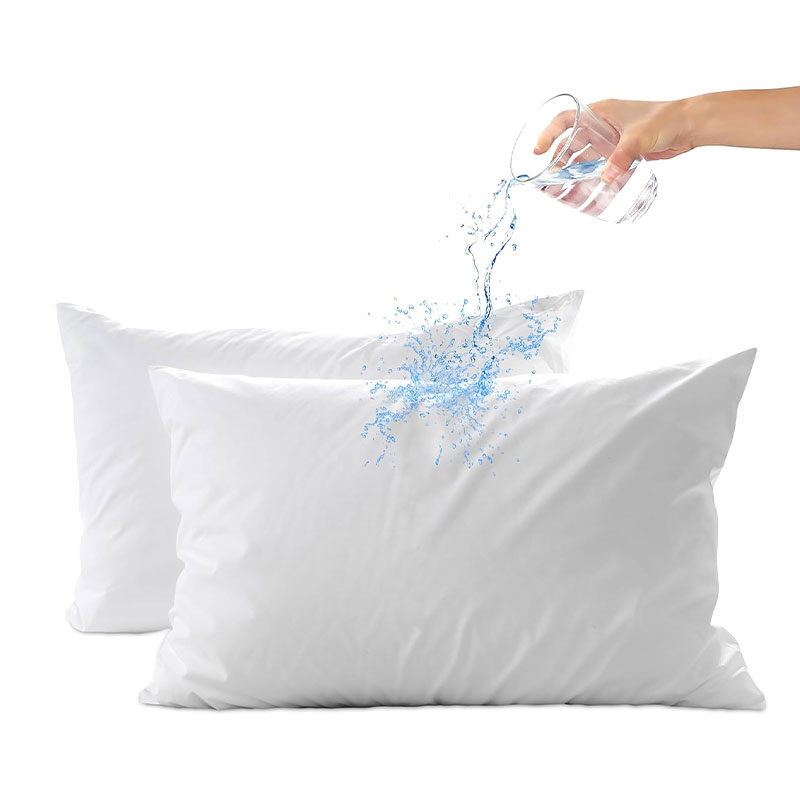
Most hotels replace their pillows every 1 to 2 years, though this varies significantly by property tier and occupancy rate. Budget hotels operating at high occupancy may cycle through pillows every 12 months, while luxury properties often extend replacement to 18–24 months by using higher-quality fills and protective encasements that preserve pillow integrity through hundreds of wash cycles. Understanding why — and how — hotels manage their pillow inventory directly informs how hospitality buyers should specify and source Hotel Pillows for long-term performance and guest satisfaction.
This article covers the full picture: replacement schedules by hotel tier, what degrades a pillow faster, the role of fill material in longevity, and how to select Premium Hotel Sleeping Pillows that balance comfort, hygiene, and cost efficiency at scale.
Content
- 1 Hotel Pillow Replacement Schedules by Property Tier
- 2 What Causes Hotel Pillows to Wear Out Faster
- 3 Soft and Firm Hotel Pillows: Choosing the Right Feel for Your Guests
- 4 Signs a Hotel Pillow Needs Immediate Replacement
- 5 What Makes a Premium Hotel Sleeping Pillow Worth the Investment
- 6 How to Calculate Your Hotel's Annual Pillow Budget
- 7 About DEEDA TEXTILE — Nantong Deeda Textile Co., Ltd.
- 8 Frequently Asked Questions
Hotel Pillow Replacement Schedules by Property Tier
Replacement frequency is not uniform across the hotel industry. Property tier, occupancy rate, laundry frequency, and pillow quality all influence how quickly a pillow reaches the end of its serviceable life. The table below summarizes typical industry practices:
| Hotel Tier | Typical Replacement Cycle | Common Fill Type | Wash Frequency |
|---|---|---|---|
| Budget / Economy | Every 12 months | Polyester hollow fiber | Every 3–6 months |
| Mid-Scale (3-star) | Every 12–18 months | Microfiber / down alternative | Every 3 months |
| Upscale (4-star) | Every 18–24 months | Down alternative / blended | Every 1–3 months |
| Luxury (5-star) | Every 18–36 months | White goose down / premium fiber | Monthly or per guest |
A 200-room upscale hotel running at 70% annual occupancy will accumulate roughly 51,100 occupied room nights per year. With 2–4 pillows per room, that means each pillow may absorb hundreds of uses before replacement — making fill quality and cover durability central purchasing decisions, not afterthoughts.
What Causes Hotel Pillows to Wear Out Faster
Pillow degradation in a hotel environment is driven by factors that are far more aggressive than typical home use. Knowing these factors helps procurement teams select the right specifications and set realistic budgets for replenishment.
Industrial Laundry Cycles
Hotel laundry operates at 60–90°C wash temperatures with commercial detergents and high-speed extraction — conditions that break down fill fibers significantly faster than domestic washing. A pillow washed monthly in industrial conditions experiences the equivalent of approximately 3–4 years of home washing within a single year of hotel service.
Continuous High-Occupancy Use
Unlike home pillows that rest unused for portions of each day, hotel pillows in high-occupancy properties may be used 200–300 nights per year. Continuous compression from different head weights, sleeping positions, and movement accelerates fill clumping and loft loss.
Fill Material Quality
Low-density polyester fill (under 600g per standard pillow) loses resilience after 30–50 wash cycles, resulting in flat, unsupportive pillows that guests notice immediately. Premium microfiber or conjugate hollow fiber fills with higher fill weights (800–1,000g) and spiral-cut construction retain their loft through 80–120 wash cycles — often doubling serviceable lifespan at a modest increase in unit cost.
Shell Fabric Quality
The pillow shell (ticking) must withstand repeated industrial washing without tearing, pilling, or allowing fill migration. Hotel-grade shells typically use 233–300 thread count cotton or polyester-cotton blends with reinforced seams. Shells with a lower thread count or poor seam construction fail before the fill is actually exhausted, forcing premature replacement.
Soft and Firm Hotel Pillows: Choosing the Right Feel for Your Guests
One of the most impactful decisions in hotel pillow procurement is firmness. Soft and Firm Hotel Pillows serve different sleeper types, and offering both options is a guest experience standard increasingly adopted by quality-focused properties. Guests who find a pillow unsuitable for their sleeping position are significantly more likely to leave negative reviews citing "poor sleep quality" — even when the mattress is excellent.
Soft Pillows
Soft pillows use lower fill weights (typically 500–700g for a standard size) or loosely structured fills like down or low-density microfiber. They compress easily under head weight, providing a plush, enveloping feel. Ideal for stomach sleepers and guests who prefer minimal loft, soft pillows also appeal to those who fold or stack pillows during sleep.
Firm Pillows
Firm pillows use denser fills (typically 900–1,200g) or structured materials such as high-density hollow fiber or gusseted construction that maintains loft under sustained pressure. They provide the cervical support that side and back sleepers need to keep the spine aligned through the night, reducing neck tension and improving sleep continuity.
The Dual-Pillow Approach
Many 4- and 5-star properties now supply two soft and two firm pillows per bed, labeled with a pillow menu card so guests can self-select. This approach reduces complaints, increases perceived room quality, and does not significantly increase per-room linen cost when correct fill weight specifications are applied to each type.
| Pillow Type | Typical Fill Weight | Best Sleeping Position | Loft Height |
|---|---|---|---|
| Soft | 500–700 g | Stomach / combination | 8–10 cm |
| Medium | 700–900 g | Back / combination | 10–12 cm |
| Firm | 900–1,200 g | Side / back | 12–15 cm |
Signs a Hotel Pillow Needs Immediate Replacement
While scheduled replacement cycles provide a baseline, housekeeping teams should inspect pillows at regular intervals and trigger early replacement based on the following observable conditions:
- Flat fold test failure: Fold the pillow in half and release — a pillow that does not spring back to its original shape within 3 seconds has lost structural resilience
- Visible yellowing or staining: Yellowing from sweat and body oils cannot be fully removed by laundering and signals hygiene and appearance degradation
- Lumpy or uneven fill distribution: Clumped fill creates pressure points that disrupt sleep and indicate the fill has permanently matted
- Shell fabric pilling or tearing: Damaged ticking allows fill migration, reduces guest comfort, and creates laundry handling issues
- Persistent odor after laundering: Odors that survive industrial washing indicate deep contamination of fill material
- Loft below minimum standard: A pillow that measures less than 7 cm in loft height when laid flat is no longer providing adequate support
Properties with a formal inspection protocol report 30–40% fewer guest complaints related to sleep quality compared to those relying solely on fixed replacement schedules.
What Makes a Premium Hotel Sleeping Pillow Worth the Investment
When evaluating Premium Hotel Sleeping Pillows for procurement, the decision should be driven by total cost of ownership over the pillow's serviceable life — not unit cost alone. A pillow that costs 40% more but lasts twice as long, generates fewer guest complaints, and requires less frequent replacement delivers a substantially better return across a full hotel deployment.
Key quality indicators for premium hotel pillow specification:
- Fill weight and type: Conjugate or spiral hollow fiber with fill weight appropriate to the firmness level; down alternative blends for luxury applications
- Shell thread count: Minimum 233 TC for standard hotel service; 300+ TC for premium and luxury tiers for improved softness, breathability, and shell longevity
- Double-stitched gusseted seams: Reinforced seams resist separation across hundreds of industrial wash cycles
- Anti-allergen and anti-bacterial treatment: Increasingly expected by guests, particularly for bedding in health-focused or family-segment properties
- OEKO-TEX or equivalent certification: Confirms absence of harmful substances in fill and shell materials — important for guest confidence and regulatory compliance in many markets
- Machine washable at 60°C: Ensures compatibility with industrial laundry without special handling instructions that increase operational cost
How to Calculate Your Hotel's Annual Pillow Budget
Effective pillow procurement planning requires a simple inventory model. Use the formula below to calculate annual replenishment needs:
Annual Pillow Requirement = (Total Rooms × Pillows per Room × Replacement Cycles per Year) + 15% Buffer Stock
Example: A 120-room hotel, 4 pillows per room, 18-month replacement cycle = 120 × 4 ÷ 1.5 = 320 pillows per year. With 15% buffer: 368 pillows to account for early-condition failures and new room setups.
Hotels sourcing through wholesale channels consistently achieve better value by consolidating annual orders rather than purchasing reactively. Committed volume orders also allow manufacturers to maintain consistent fill specifications and fabric batches — ensuring uniform feel and appearance across your entire room inventory.
About DEEDA TEXTILE — Nantong Deeda Textile Co., Ltd.
Nantong Deeda Textile Co., Ltd. officially established its domestic and international trade and sales operations in 2013, creating an integrated industry and trade enterprise spanning the full production chain — from fabric weaving and processing through to finished bedding products. As a professional OEM Hotel Pillow Manufacturer and ODM Hotel Pillow Factory, DEEDA brings more than 15 years of industry experience to every order.
The company currently operates more than 150 jet looms, 60 rapier looms, 50 flat sewing machines, 3 carding machines, and 8 quilting machines, supported by a workforce of over 200 skilled workers. A dedicated professional QC department and international sales team ensure that every product meets the reliability and quality standards demanded by global hospitality clients.
DEEDA's client base spans high-end hotels, hotel distributors, retailers, and hotel wholesalers worldwide. After more than a decade of dedicated service, customers have spread across every major market globally. The company remains committed to maintaining operational vitality and creating lasting value for both customers and society.