 EN
EN English
 русский
 Español
 عربى
عربى
 Online Message

Content
- 1 The Direct Answer: Replace Hotel Bathrobes Every 1 to 2 Years Under Standard Use
- 2 Why Bathrobe Condition Matters More Than Ever to Guests
- 3 Key Factors That Determine How Long a Hotel Bathrobe Lasts
- 4 Replacement Interval Benchmarks by Hotel Tier and Occupancy
- 5 Cotton Hotel Bathrobes: Why Material Choice Directly Affects Replacement Frequency
- 6 How to Inspect a Hotel Bathrobe and Decide When It Must Be Replaced
- 7 Custom Hotel Bathrobes: Branding Value and When It Influences Replacement Timing
- 8 Building a Practical Bathrobe Replacement and Rotation Program
- 9 Frequently Asked Questions
The Direct Answer: Replace Hotel Bathrobes Every 1 to 2 Years Under Standard Use
Most hotel housekeeping and linen management guidelines recommend replacing bathrobes every 12 to 24 months, depending on occupancy rate, laundering frequency, fabric quality, and the property's service tier. For high-occupancy urban hotels, annual replacement is often necessary. For lower-volume resort properties or boutique hotels with premium fabrics, two years is an achievable and practical standard.
A worn hotel bathrobe — pilling, thinning terry loops, yellowing, or persistent odor — directly impacts guest perception of cleanliness and quality. In an era where review platforms influence booking decisions within seconds, the condition of in-room amenities like bathrobes has measurable commercial consequences. This guide provides hotel managers and procurement teams with practical criteria, material comparisons, and a structured replacement framework for 2026.
Why Bathrobe Condition Matters More Than Ever to Guests
Guest expectations for in-room textile quality have risen steadily over the past decade. A 2024 survey by the American Hotel and Lodging Association found that 76% of guests at four- and five-star properties considered bathrobe quality a significant factor in their overall stay rating. Among guests who left negative linen-related reviews, worn or rough-feeling bathrobes were cited in 38% of complaints — second only to stained or inadequately cleaned linens.
The bathrobe occupies a unique psychological position among hotel amenities: it is a tactile luxury item that guests interact with directly after a shower or bath — a moment of deliberate relaxation. A fraying or thinned-out robe signals neglect far more acutely than, for example, a worn carpet corner. For properties offering custom hotel bathrobes with embroidered logos or personalized detailing, degraded condition undermines the brand positioning the customization was intended to reinforce.
Key Factors That Determine How Long a Hotel Bathrobe Lasts
Replacement intervals are not one-size-fits-all. The actual lifespan of a hotel bathrobe depends on five primary variables:
Fabric Weight and Construction
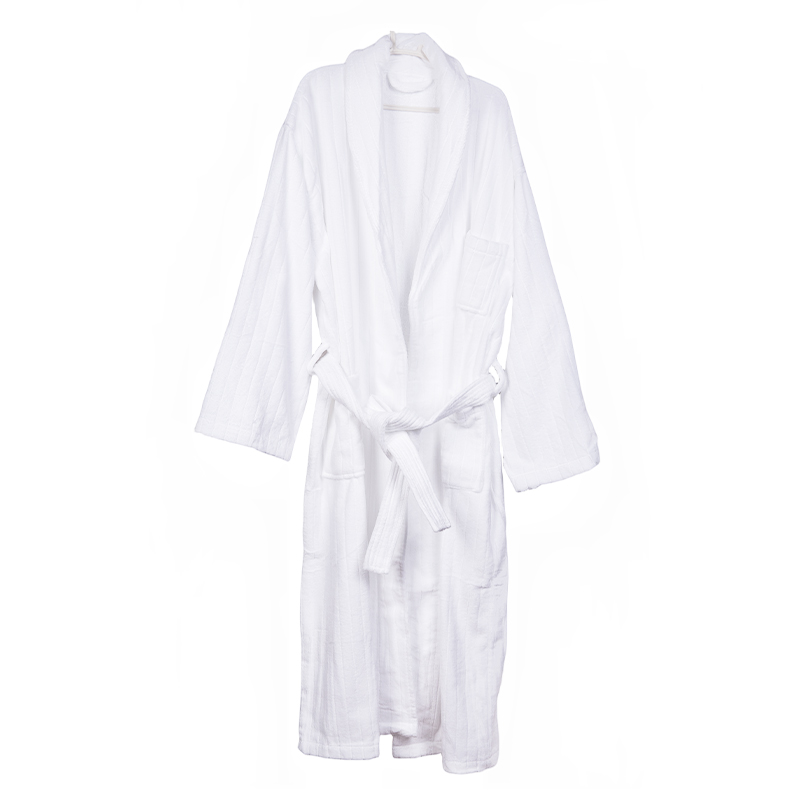
Terry cloth bathrobes are graded by GSM (grams per square meter). A standard hotel robe typically ranges from 300 to 500 GSM. Heavier weight robes (400–500 GSM) have more material to wear through, extending their appearance life under the same laundering cycle. Ultra-lightweight robes (under 300 GSM) may look fresh initially but deteriorate visibly after as few as 50–70 laundry cycles. Premium waffle-weave and double-loop terry constructions retain their structure better than single-loop terry under repeated high-temperature washing.
Laundering Frequency and Process
In most full-service hotels, bathrobes are laundered after every guest stay. A property running at 80% annual occupancy with an average stay of 2 nights will launder each robe approximately 140–150 times per year. Industrial laundering at temperatures of 60–90°C with commercial detergents and tumble drying causes cumulative fiber stress regardless of initial fabric quality. Each laundering cycle degrades tensile strength and loop height in terry fabric by a measurable increment.
Fiber Composition
100% cotton hotel bathrobes — particularly those made from combed or ring-spun cotton — offer superior durability and softness retention compared to blended fabrics. Cotton fibers maintain absorbency and loop integrity through more laundry cycles than polyester blends. However, pure cotton is more susceptible to yellowing and gray-out from hard water and alkaline detergents without proper linen care chemistry. Egyptian and Turkish cotton varieties, while costlier, perform measurably better across extended laundry lifecycles.
Storage and Handling Conditions
Bathrobes stored in humid environments or inadequately ventilated linen closets are prone to mildew growth and accelerated fabric degradation. Proper storage on wide-shouldered hangers in climate-controlled rooms significantly extends the presentable life of robes between laundry cycles and before replacement becomes necessary.
Guest Handling and Wear Patterns
Guests at leisure resort properties and spas tend to wear bathrobes for extended periods and in a wider range of situations — poolside, at breakfast, during spa treatments — which creates more stress on seams, belts, and pocket stitching than typical post-shower use. Hotels in these segments should apply shorter replacement cycles than their occupancy rate alone would suggest.
Replacement Interval Benchmarks by Hotel Tier and Occupancy
The following benchmarks reflect industry practice and linen management standards across hotel categories. These intervals assume standard commercial laundering after every guest stay.
| Hotel Tier | Typical Occupancy Rate | Annual Laundry Cycles | Recommended Replacement |
|---|---|---|---|
| Budget / 3-Star | 65–75% | 100–130 | Every 18–24 months |
| Upper Midscale / 4-Star | 75–85% | 130–160 | Every 12–18 months |
| Luxury / 5-Star | 75–90% | 140–170 | Every 10–14 months |
| Resort / Spa | 70–80% | 120–150 + extended wear | Every 10–12 months |
| Boutique / Low Occupancy | 50–65% | 70–100 | Every 24–30 months |
Cotton Hotel Bathrobes: Why Material Choice Directly Affects Replacement Frequency
The fabric selected for a cotton hotel bathrobe is the single largest determinant of how long it remains presentable — more significant than laundering frequency alone. Here is a direct comparison of the most common material options used in hospitality:
| Material | Estimated Laundry Lifespan | Softness Retention | Absorbency | Best Suited For |
|---|---|---|---|---|
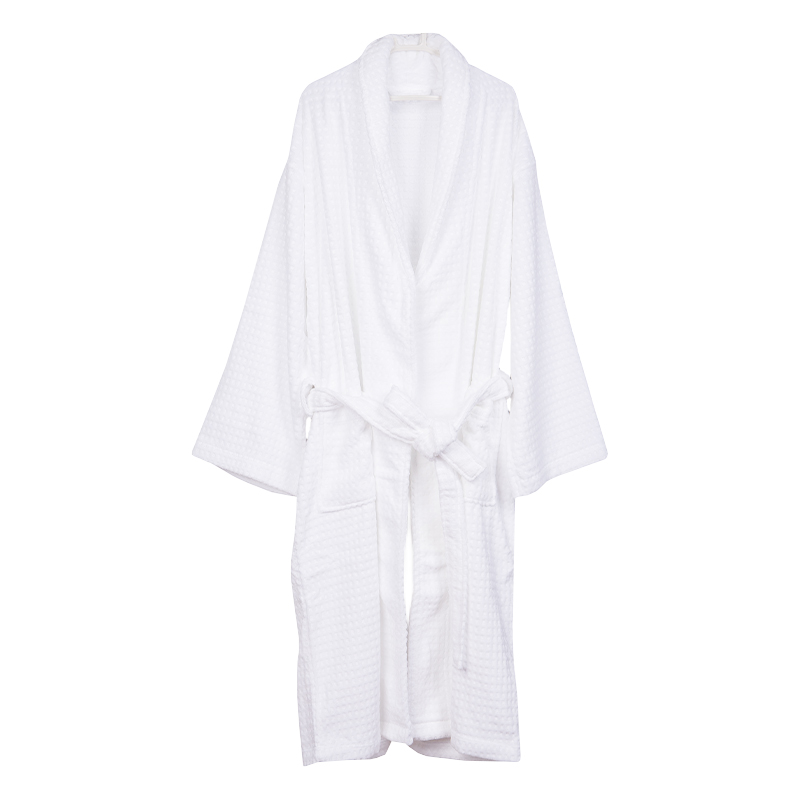
| 100% Combed Cotton Terry | 150–200 cycles | High | Excellent | 4–5 star, spa |
| Egyptian / Turkish Cotton | 180–250 cycles | Very High | Excellent | Luxury / 5-star |
| Cotton-Polyester Blend | 80–120 cycles | Moderate | Moderate | Budget / 3-star |
| Microfiber | 70–100 cycles | Initially high | Low–Moderate | Lightweight, warmer climates |
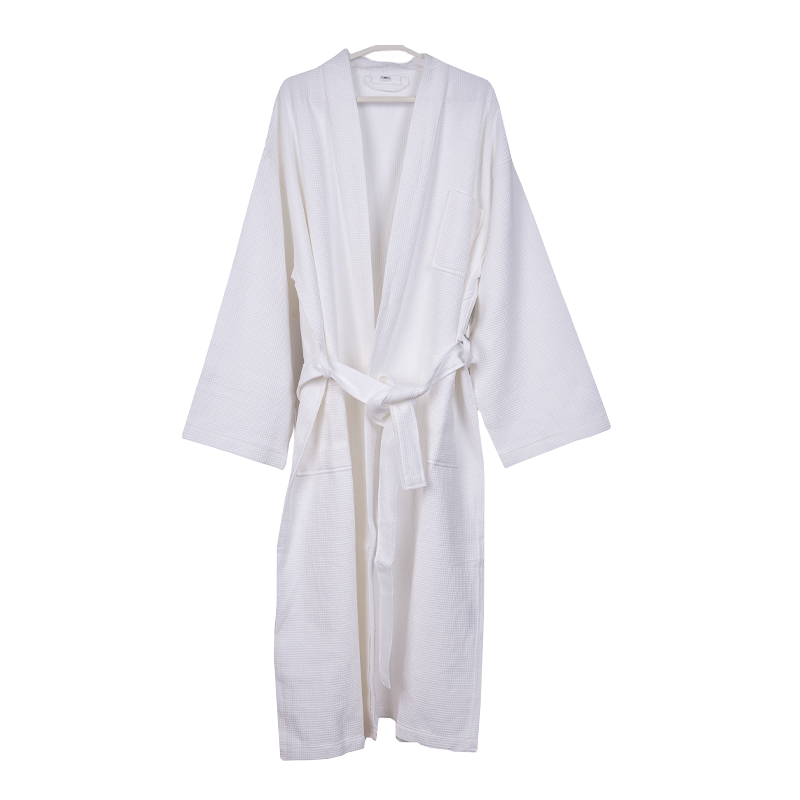
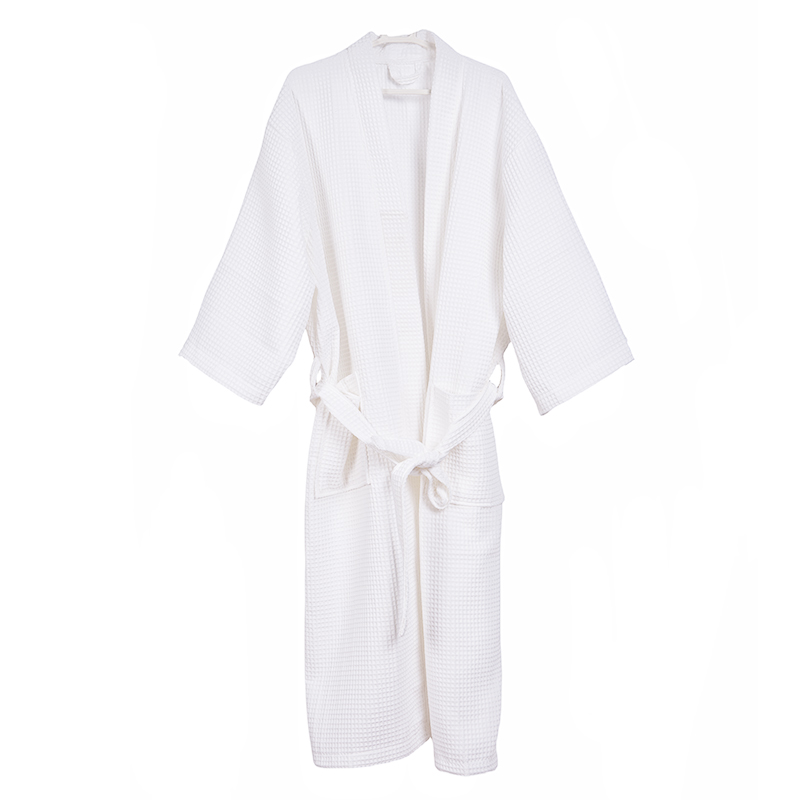
| Waffle Weave Cotton | 130–180 cycles | High | Good | Spa, resort, boutique |
For properties seeking to reduce long-term replacement costs, investing in a cotton hotel bathrobe made from 100% combed or Egyptian cotton at a higher GSM typically yields a lower total cost per cycle than purchasing lower-cost blended fabric robes that require replacement twice as often. A 400 GSM combed cotton robe lasting 180 cycles delivers 50–80% more usable life than a 300 GSM poly-blend robe rated for 100 cycles.
How to Inspect a Hotel Bathrobe and Decide When It Must Be Replaced
Replacement decisions should not be based on elapsed time alone. Housekeeping teams and linen managers should conduct a structured visual and tactile inspection at regular intervals. The following criteria define when a robe has reached the end of its serviceable life:
- Pilling on the robe body: When terry loops break down and form persistent surface pills that cannot be removed by laundering, the robe has lost its premium appearance and should be retired.
- Thinning of the terry pile: Hold the robe up to a light source — if the weave is visibly translucent where it should be thick and opaque, the fabric has worn through significantly.
- Yellowing or gray-out that persists after washing: This indicates mineral deposit buildup from hard water or detergent residue that normal laundering cannot reverse. Chemical stripping can extend service life temporarily, but persistent discoloration signals replacement is due.
- Residual odor after laundering: A robe that retains any musty or chemical smell after a standard laundry cycle indicates fiber breakdown or irreversible microbial contamination.
- Seam fraying or belt damage: Loose seams at the collar, pockets, or cuffs and frayed belt loops are structural failures that present a poor impression regardless of the robe's overall fabric condition.
- Embroidery or logo degradation on custom robes: For custom hotel bathrobes with branded embroidery, faded, unraveling, or distorted logo work should trigger replacement, as worn branding is counterproductive to the positioning it was intended to convey.
Custom Hotel Bathrobes: Branding Value and When It Influences Replacement Timing
Custom hotel bathrobes with embroidered monograms, property logos, or woven labels serve both a functional and brand communication role. For luxury and boutique properties, these robes are part of the guest experience narrative — and their condition carries brand equity implications beyond simple comfort.
Hotels offering custom robes for in-room use — or as optional retail purchases — should apply a higher replacement standard than they might for generic stock robes. A useful benchmark: if the robe would not meet the standard you would sell it at, it should not be presented to a guest. For properties that offer branded robes as purchasable souvenirs, maintaining a two-tier stock system (retail-quality and in-service) ensures that the robes available for purchase always represent the property's quality standard accurately.
Additionally, properties refreshing their brand identity, updating logos, or rebranding entirely should plan bathrobe replacement cycles to align with the broader brand transition — retiring old-logo robes proactively rather than allowing mixed branding to persist in guest rooms during a transition period.
Building a Practical Bathrobe Replacement and Rotation Program
Rather than replacing all bathrobes reactively when they fail inspection, well-managed hotel linen programs use a proactive rotation and replacement schedule that distributes procurement costs and avoids large-scale simultaneous replacement. A structured program includes:
- Laundry cycle tracking: Tag or code each robe batch with a laundering start date and log cumulative wash cycles. Many commercial laundry providers offer cycle-tracking labels or RFID linen tracking systems for properties managing large inventories.
- Quarterly visual inspections: Assign housekeeping supervisors to conduct a structured robe inspection across all rooms every quarter, using standardized assessment criteria (pilling, color, seam integrity, odor) to flag individual items for retirement rather than waiting for the full batch replacement cycle.
- Staggered batch ordering: Instead of replacing the entire robe inventory at once, order replacements in batches of 25–33% of total stock every 4–6 months. This ensures a continuous rotation of fresher items while smoothing procurement costs across the fiscal year.
- Retiring robes responsibly: Retired hotel bathrobes in serviceable condition should not be discarded. Many properties donate retired stock to charitable organizations, employee programs, or textile recycling initiatives — an approach that aligns with sustainability commitments increasingly expected by guests.
- Documenting replacement history for procurement planning: Track which batches were ordered, when they were retired, and the average laundry cycle count at retirement. This data informs future material selection decisions and budget forecasting for replacement linen programs.